Go and Make…
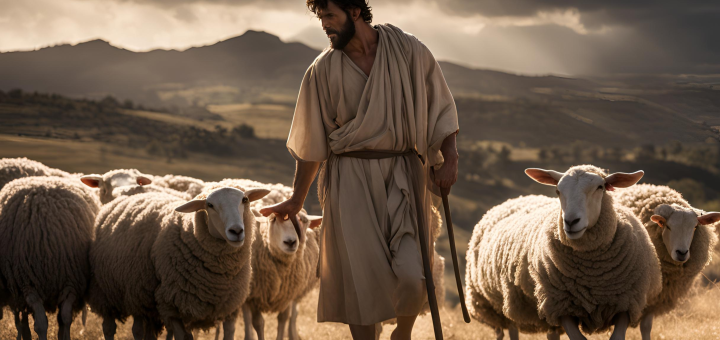
One of the last things Jesus did prior to his ascension was to issue a commission to the eleven apostles. Although spoken to the eleven, this commission, “Go and make disciples…” is seen today as being universal by most of the church community. Although this command is vastly known by most of the church world, it is inexplicably given minor focus within the programming structure of most churches. After reading the Matthew 28 passage, I would paraphrase Jesus’ meaning something like this: “Since my authority is universal, go everywhere in my name baptizing and disciplining believers teaching them obedience to my word.”
For me, the optimum imperative in this entire commission is that of making disciples. The synoptic gospels are replete with direction referencing baptism, but the concept of discipleship is much more implicit in the life and ministry of Jesus. Somehow I feel the church has missed the significance and imperativeness that discipleship carries for the entire Christian community. It seems as if the church has substituted “make converts” for “make disciples.” Contemporary churches actually appear more interested in building up their attendance than in developing the spiritual life of their adherents. Unfortunately the church has subdivided Christianity into classes promoting the message that one can be a Christian without being a disciple. I don’t think this distinction ever existed in the early church.
In the beginning, it was simply understood that if one became a believer, discipleship was inclusively part and partial of what that meant. This was not a progressive move. Being a disciple was not becoming some sort of “super” Christian. It was the standard of what it meant to be a Christian. Frankly, one could not separate becoming a disciple from the concept of following. Jesus made this crystal clear when he said, “And if you don’t carry your own cross and follow me, you cannot be my disciple” (Lk. 14:27 NLT).
Jesus’ invitation to prospective believers was always an invitation to discipleship. When he called Matthew, a tax collector, Jesus said, “Follow me and be my disciple.” To his disciples Jesus said, “if any of you wants to be my follower, you must give up your own way, take up your cross, and follow me.” Originally , it would be unimaginable to think of becoming a believer and not being committed to follow in Jesus’ steps. That seems somewhat tantamount to wanting to be a Marine but not being willing to undergo all the training that transforms one’s life into that entity. In a very real sense, “believership” cannot be separated from “discipleship.”
Jesus was emphatic from the onset of his ministry that becoming his follower meant having a willingness to “pay the cost.” He actually disparaged shallow, half-hearted, and unthoughtful responses to his calling. The message was clear, it was better not to make a commitment than to commit and then fall away. Jesus said, “Foxes have dens to live in, and birds have nests, but the Son of Man has no place even to lay his head.” On another occasion, Jesus said, “There is still one thing you haven’t done, go and sell all your possessions and give the money to the poor, and you will have treasure in heaven. Then come, follow me.” In Lk. 14:33 we read, “In the same way, those of you who do not give up everything you have cannot be my disciples.” It is interesting that King David refused to offer sacrifices that cost him nothing. In Dietrich Bonhoeffer’s classic book, “The Cost of Discipleship,” he characterizes Jesus’ invitation as, “Come and die.”
It is unfortunate that the Christian message is so often presented as come to Jesus and have all your problems resolved. The prosperity heresy is completely antithetical to the gospel message. Jesus’ clarion word in this regard pulls no punches: “Enter by the narrow gate, for wide is the gate and broad is the way that leads to destruction, and there are many who go in by it. Because narrow is the gate and difficult is the way which leads to life, and there are few who find it.”
Broadly speaking, there is a vast difference between pristine and contemporary discipleship. In churches today that actually have some kind of discipleship programs, they are primarily didactic in nature. That is, their method of discipling is fundamentally through teaching. Thus discipling would be characterized as something one would learn such as a concept. In this case it is assumed that inculcated propositions would translate as changed behavior in the persons being taught. Unquestionably, teaching is a part of discipleship training. When Jesus sent the apostles out to “make disciples,” he also said, “Teach these new disciples to obey all the commands I have given you.”
However, in the early church, discipleship teaching was more supplemental rather than primary. This was because becoming a disciple wasn’t so much about what one learned intellectually as it was about what one began to live in his life. To coin an old phrase, discipleship was more caught than taught. Jesus’ teaching was almost exclusively concerning the kingdom of God. Becoming a disciple in the first century involved an entirely different procedure than the academic approach popular today.
Christian discipleship from the beginning was not unique with respect to the process. If you wanted to be discipled in a particular discipline, you simply found a “master” in that subject and joined yourself to him. You basically lived with this person sharing everything including all that they experienced. Your learning didn’t come from a textbook but rather from the life responses of the master. As you ate, walked , and lived with this person, you discovered through their responses to other persons and situations exactly what defined their life. It was kind of like finding out just what makes a person “tick.” Through various trials, problems, and challenges, you would discover the deepest values, motivations, and attitudes of the master.
This is what the 12 disciples whom Jesus called were doing. They literally left everything and joined themselves to Christ. In Lk. 5, Jesus calls Levi to become his disciple, and we see the typical response: “So Levi got up, left everything, and followed him.” When Jesus called the fishermen, the Word says they left everything and followed him. Scripture indicates these men left family and employment to follow Jesus. These examples may be extreme in their circumstances, but they accurately reflect the radical nature of the response from those who hear the call. Matters of family, employment, living conditions, etc. are personal and should be answered in a commenserate manner. On the other hand, there are attributes of discipleship that should be universally recognized and embraced.
The purpose of discipleship is conformity with Christ. Not just learning something about him but by taking on his very nature. To accomplish this we can’t exactly replicate the conditions of the early church. However, we can create similar nurturing environments which will foster Christ-like attitudes and behaviors. If our lives are going to be conformed to the image of Christ, we are going to have to be committed to a relatively small group of like-minded people. Within this smaller fellowship, we must then be willing to exhibit transparency, honesty, and accountability. We must be willing to allow others to see the rawest aspects of our lives and be willing to make faithful responses when others speak into our lives. We all have “dirty laundry” in our lives. Our willingness to air that laundry will be the measure of our commitment.
This kind of small group should not be contrived or otherwise selectively fashioned to be more symbiotic or homogeneous. You really don’t want to be gathered with like-minded people. Have you ever considered the diversity among the original twelve? It was almost as if Jesus intentionally picked persons guaranteed not to get along. For example, consider the potential friction between a tax collector and a zealot! When we are committed to be conformed to the image of Christ, we will also be committed to righteously resolve anything standing in the way of that reality.
Most churches today have some kind of small group program. However, if they are not committed to the type of discipleship being described here, it will most likely never happen. Bible study and prayer are noble goals but groups pursuing only those or similar aims are not discipleship oriented. If we are serious about our relationship with the Lord Jesus, we will join or initiate a small fellowship of believers committed to conformity to the image of Christ.
It is obvious that easy “believism” was not a significant goal with Jesus. He was seeking and continues seeking committed followers who have counted the cost. We have been given an awesome and foundational truth and promise upon which to proceed…
I have been given all authority in heaven and on earth…Therefore, go and make disciples of all the nations…”